
INTRODUCTION
Financial inclusion ensures that individuals and businesses have access to useful, affordable, and sustainable financial products through the responsible delivery of transactions, payments, savings, credit, and insurance. Such inclusion is crucial for reducing poverty, fostering economic growth, and empowering underserved populations in managing financial risks and securing their future. According to the World Bank’s Consultative Group to Assist the Poor (CGAP), only 58 percent of Ghana’s adult population had access to formal financial services in 2015.[1] In this survey, access to formal financial services in Ghana increased significantly from 41 percent to 58 percent between 2010 and 2015, yet 42 percent of the population still lacks access to financial services. Certain groups including the poorest regions (Upper West, Northern, Volta, Upper East, and Brong Ahafo), rural residents, women, the poorest quantile of the population, and youth have even less access than their counterparts. The study showed how underserved the estimated 42 percent of the population were within the financial sector hence the need for innovative financial products like the digital and mobile money services. Mobile money services bridge the gap between the undeserved people and the financial sector as they are easily accessible even in rural communities. The increase in access to financial services is expected to create economic opportunities and contribute to poverty reduction.[2]
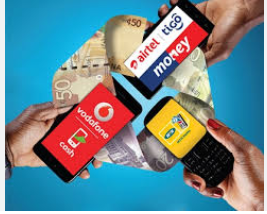
The Ghanaian mobile money landscape began with MTN in 2009. Subsequent entries included Zain’s Zap service in 2010 and Vodafone Cash in 2015; these providers have since been rebranded as AT and Telecel, respectively. This created a significant shift in the financial sector as people who previously could not have accessed financial systems through traditional means could now participate through access to the mobile money system. New findings from the 2025 KPMG West Africa Banking Industry Customer Experience Survey show that ATM usage fell sharply to 16 percent in 2025, down from 32 percent in 2023, underscoring a decisive shift in how Ghanaians access and move money. [3] At the same time, mobile money usage surged to 80 percent in 2025, the highest level recorded since 2022 and a seven-percentage-point increase from the previous year.[4] The data confirms what banks, telcos and fintechs have observed for some time: convenience, speed and reliability now matter more to customers than physical access to cash.
As with everything in our daily lives, the mobile money system has it pros and cons. The introduction of the mobile money system has seen some positive development in the financial sector and the top three of those would be;
- Increased Financial Inclusion
Mobile money has extended financial services to previously underserved populations, especially rural residents and low-income earners. Individuals no longer need a traditional bank account to participate in financial transactions. With just a mobile phone and a registered SIM card, users can access financial services anytime and anywhere.
- Convenience and Accessibility
Mobile money eliminates the need to travel long distances to banks or ATMs. Users can transfer funds, pay bills, purchase airtime, and receive payments within minutes. This convenience saves time, reduces transportation costs, and enhances economic productivity.
- Economic Empowerment
Small businesses, market traders, and informal sector workers benefit greatly from mobile money services. It facilitates faster transactions, improves cash flow management, and reduces the risks associated with carrying large sums of cash. Mobile money has also enabled the growth of digital commerce and financial innovation in Ghana.
Despite its numerous benefits, mobile money has also given rise to disputes and consumer protection concerns. Common mobile money disputes in Ghana include:
- Unauthorized transactions
- Fraud and mobile money scams
- Erroneous transfers (sending money to the wrong number)
- Delays in transaction reversals
- Agent misconduct
- SIM swap fraud
Fraud, in particular, has become a significant issue. Cybercriminals use tactics such as impersonation, phishing, and fake promotions to deceive unsuspecting customers. Many users, especially those with limited digital literacy, are vulnerable to such schemes.
Recent news reports, including an incident from Wenchi reported by the Citi Newsroom, [5] show the seeming prevalence of fraudulent activity in the mobile money space. In the Wenchi case, the Wenchi District Court was reported to have remanded five individuals suspected of engaging in a coordinated mobile money fraud scheme involving conspiracy to commit crime and defrauding by false pretense. The accused persons allegedly defrauded a victim of approximately GH¢130,000 through deceptive tactics commonly associated with mobile money scams, including falsely claiming that funds had been mistakenly transferred and persuading the victim to reverse the transaction. Investigations revealed that the suspects operated as part of a syndicate targeting unsuspecting individuals across multiple locations in Ghana and had allegedly been engaged in similar fraudulent activities over an extended period.
The court remanded the accused persons to assist with ongoing investigations, with proceedings adjourned to allow for further inquiry. This case highlights the increasing sophistication of mobile money fraud schemes and underscores the need for stronger consumer protection mechanisms, improved public awareness, and more efficient dispute resolution processes within Ghana’s digital financial ecosystem.
Erroneous transfers are another frequent problem. Once funds are sent to the wrong number, recovering them can be difficult, especially if the recipient withdraws the funds immediately or if the sender used a payment system abroad. These disputes often leave consumers financially and emotionally distressed, raising important questions about accountability and consumer rights.
THE LEGAL AND REGULATORY FRAMEWORK GOVERNING MOBILE MONEY
Mobile money services in Ghana operate under a structured regulatory regime led by the Bank of Ghana. The two principal statutes governing mobile money disputes and consumer protection are:
- Payment Systems and Services Act, 2019
- Electronic Transactions Act, 2008
Other relevant legal instruments include data protection regulations and Bank of Ghana directives on consumer recourse mechanisms.
The Payment Systems and Services Act, 2019 (Act 987)
The Payment Systems and Services Act (Act 987) provides the primary legal framework for electronic money issuers and payment service providers in Ghana. The Act stipulates the oversight and regulatory regime covering digital money services primarily through licensing with regulatory control given to the Bank of Ghana.
Act 987 requires all electronic money issuers (EMIs) to obtain licensing and operate under the supervision of the Bank of Ghana. This ensures:
- Financial soundness of providers
- Operational risk management
- Safeguarding of customer funds
- Compliance with anti-money laundering standards
The Act strengthens consumer protection by imposing prudential and operational standards on mobile money providers. The Act also mandates that electronic money float be held in trust accounts with partner banks. This protects customers in the event of insolvency of the service provider. Funds are segregated from the provider’s operational accounts, thereby reducing systemic risk. This provision is crucial in dispute contexts where consumers question the security of their stored value.[6]
The Act requires payment service providers to establish internal dispute resolution mechanisms. [7]Consumers must be given accessible complaint channels, and providers are required to respond within stipulated timelines. If internal mechanisms fail, consumers may escalate complaints to the Bank of Ghana. This layered dispute resolution model strengthens accountability. However, practical enforcement remains inconsistent, particularly in rural areas where consumers may lack awareness of escalation procedures.
THE ELECTRONIC TRANSACTIONS ACT, 2008 (ACT 772)
The Electronic Transactions Act establishes the legal validity of electronic communications and transactions in Ghana. It provides a foundational basis for the use of electronic transactions as legal alternative for traditional modes of transacting.
Legal Recognition of Electronic Transactions
Section 5 of the Act 772 gives legal effect to electronic records, signatures, and communications. This means mobile money transactions are legally enforceable and admissible in court. In dispute resolution, transaction records, SMS confirmations, and electronic logs can serve as evidence.[8]
Liability for Unauthorized Transactions
The Act also addresses issues relating to unauthorized access and cybercrime. It criminalizes hacking, identity theft, and fraudulent electronic communications. Where fraud occurs through unauthorized system intrusion, the perpetrator may face criminal liability. However, the Act does not always clearly allocate civil liability between service providers and consumers in cases involving negligence (e.g., where a consumer unknowingly shares a PIN). This creates ambiguity in cases of SIM swap fraud or social engineering scams.
Protection Against Electronic Fraud
Section 122 of the Act 772 criminalizes electronic fraud and imposes penalties for cyber-related financial crimes. While this strengthens deterrence, enforcement challenges persist due to:
- Limited digital forensic capacity
- Cross-border fraud networks
- Delays in prosecution
Thus, while the Act provides criminal remedies, victims often struggle to recover lost funds.[9]
GAPS WITHIN EXISTING LEGAL FRAMEWORK
Despite the protections provided by these two statutes, several gaps remain in addressing mobile money disputes and consumer protection in Ghana. Some of these gaps are;
- Lack of Clear Liability Allocation
Neither Act clearly defines how liability should be allocated between mobile money providers, telecommunications operators, agents, and consumers in cases of unauthorized transactions or fraud. This lack of clarity can create uncertainty during dispute resolution and may result in inconsistent outcomes. Maybe the Bank of Ghana determines liability per case basis but a definition to guide who is liable with some case examples will make it easier to work with.
- Weak Regulation of Erroneous Transfers
Mistaken transfers remain one of the most common mobile money disputes in Ghana. While service providers attempt to reverse such transactions, the legal framework does not establish mandatory timelines or procedures for transaction reversals. In instances where the transfer was from a payment platform abroad, the sender risks losing their money especially when the payment platform cannot facilitate a reversal.
- Limited Consumer Awareness Measures
Both Acts focus primarily on regulatory oversight and legal enforcement but provide limited provisions requiring service providers to educate consumers about fraud risks and safe digital financial practices.
- Weak Dispute Resolution Mechanisms
Currently, consumers must rely on internal complaint mechanisms provided by service providers or escalate disputes to the Bank of Ghana. There is no specialized institution dedicated to resolving digital financial disputes.
COMPARATIVE ANALYSIS WITH THE KENYAN M-PESA
A useful comparative perspective can be drawn from Kenya, which has developed one of the most sophisticated mobile money regulatory frameworks in Africa, largely driven by the widespread adoption of M-Pesa. In Kenya, mobile money services are principally regulated and overseen by the Central Bank of Kenya.[10] In contrast to Ghana’s dual statutory framework comprising the Payment Systems and Services Act, 2019 and the Electronic Transactions Act, 2008, Kenya’s regulatory approach is supported by more detailed operational guidelines governing mobile money services. These procedures were adopted by Safaricom, the network responsible for M-Pesa. These guidelines provide clearer direction on issues such as agent regulation, transaction reversal procedures, and the handling of consumer complaints. [11]While Ghana’s regulatory framework particularly following the enactment of Act 987 has significantly strengthened oversight of payment systems, further reforms may be necessary to address persistent consumer protection challenges.
SUGGESTED REFORMS WITHIN THE LEGISLATION TO AID WITH MOBILE MONEY DISPUTES
The legislation should introduce a clear liability framework specifying the circumstances under which service providers, agents, or consumers bear responsibility for financial losses. The Bank of Ghana can adopt the approach of Central Bank of Kenya and allow service providers to create guidelines which are in alignment with the laws that govern payment platforms consumption and also takes into account allocation of liability in some instances.[12] In the current acts, there is no allocated liability in the face of financial loss, which doesn’t serve a consumer well. Secondly, the law should require payment service providers to implement standardized reversal procedures and time limits for addressing erroneous transfers especially cases where the transfer was made from a payment system abroad.
There should be a reversal procedure that doesn’t involve the sender visiting the company regardless of where the transfer was initiated from. Additionally, there should be mandatory consumer education programs should be incorporated into the regulatory framework to improve digital financial literacy and reduce fraud. And the establishment of an independent financial ombudsman for digital financial services could provide faster and more accessible dispute resolution mechanisms.
CONCLUSION
The Payment Systems and Services Act, 2019 and the Electronic Transactions Act, 2008 collectively form the foundation of Ghana’s legal framework governing mobile money services and electronic financial transactions. These laws provide important safeguards, including regulatory oversight, protection of customer funds, legal recognition of electronic transactions, and criminal sanctions against electronic fraud. However, the rapid expansion of mobile money services has exposed gaps in the legal framework, particularly in relation to liability allocation, erroneous transfer procedures, consumer awareness, and dispute resolution mechanisms. Addressing these weaknesses through targeted legislative reforms and stronger regulatory enforcement will be essential to ensuring effective consumer protection and maintaining public confidence in Ghana’s digital financial ecosystem.
[1] Ministry of Finance (Ghana), National Financial Inclusion and Development Strategy (NFIDS) 2018–2023 (Ministry of Finance) https://mofep.gov.gh/sites/default/files/acts/NFIDs_Report.pdf accessed 19 February 202
[2] Ibid
[3] KPMG, West Africa Banking Industry Customer Experience Survey 2025: Competing for the Customer – Beyond the Basics in an AI-Shaped Financial Landscape (KPMG 2025) Accessible from: https://assets.kpmg.com/content/dam/kpmg/ng/pdf/2025/12/2025%20KPMG%20West%20Africa%20Banking%20Industry%20CX%20Survey%20Report.pdf at p. 32, Accessed Friday the 23rd February 2026.
[4] Ibid
[5] Court remands five over alleged mobile money fraud in Wenchi’ Citi Newsroom (23 January 2026) https://citinewsroom.com/2026/01/court-remands-five-over-alleged-mobile-money-fraud-in-wenchi/ accessed 30 March 2026
[6] Section 37, Act 987.
[7] Ibid, Section 47
[8] See the case of Kate Bimpong v. Pastor Sampson Joe Baning Head Pastor Living Testimonies for Living Jesus Bible Ministry (2016) JELR 107102 (HC)
[9] Electronic Transactions Act 2008 (Act 772) https://nita.gov.gh/wp-content/uploads/2017/12/Electronic-Transactions-Act-772.pdf accessed 5 March 2026.
[10] Wanjau, ‘Trade in Services: Challenges and Opportunities for Developing Countries’ (World Trade Organization Workshop, June 2013) https://www.wto.org/english/tratop_e/serv_e/wkshop_june13_e/wanjau_e.pdf accessed 5 March 2026.
[11] Safaricom PLC, M-PESA Customer Terms and Conditions (Safaricom 2024) https://www.safaricom.co.ke/images/Downloads/M-PESA-Customer-Terms-Conditions.pdf accessed 10 April 2026
[12] Safaricom PLC, M-PESA Customer Terms and Conditions (Safaricom 2024) https://www.safaricom.co.ke/images/Downloads/M-PESA-Customer-Terms-Conditions.pdf accessed 10 April 2026
BY; Priscilla Mbama Yakubu Disclaimer: This publication is for information purposes only and is not intended to constitute legal advice. If you require information on any matter discussed in this article, kindly reach out to the firm directly. Nartey Law Firm is a leading corporate and commercial law firm in Ghana providing legal services to individuals, domestic and international businesses. Ensuring the success of our clients’ objectives is at the core of what we do. Comprised of a dedicated team of lawyers with extensive experience in corporate, commercial and international law and litigation, we pride ourselves with the diligent execution of all client matters, whilst guaranteeing an uncompromising standard with respect to excellence in service delivery. Some of our focus areas are Real Estate, Trade and Commerce, Banking and Finance, Regulatory Advisory, Capital Markets and Mergers and Acquisitions. CONTACT: NARTEY LAW FIRM TEL: +233 (0)553508582 Email:info@narteylaw.com